


Bubbling methane around subsea infrastructure is an alarming discovery ahead of decommissioning – but is it a leak from the reservoir, or harmless shallow gas?
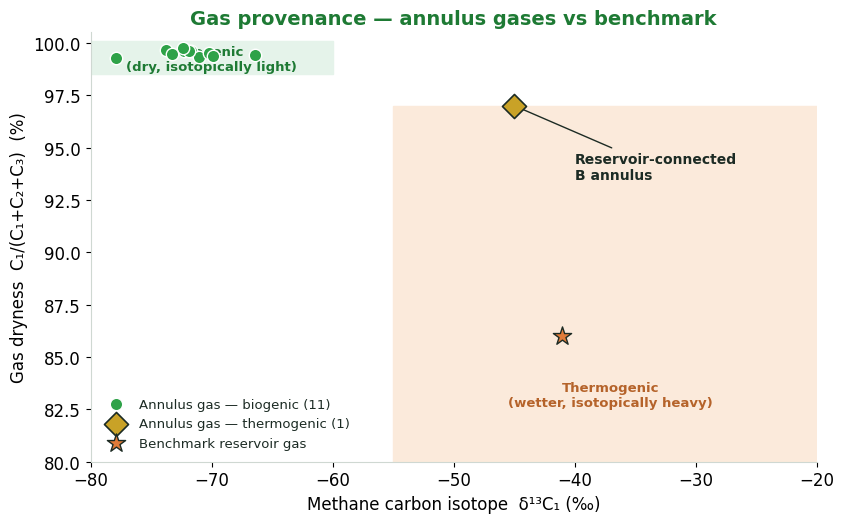
During abandonment planning on a North Seafield, ROV inspection found gas in multiple annulus void spaces across around a dozen wells. APT combined gas and fluid geochemistry – composition and stable carbon and hydrogen isotopes (δ13C & δD) – with wellsite gas interpretation in its Girasol software to establish the gas type, source and whether it posed a problem.
Scope of Work
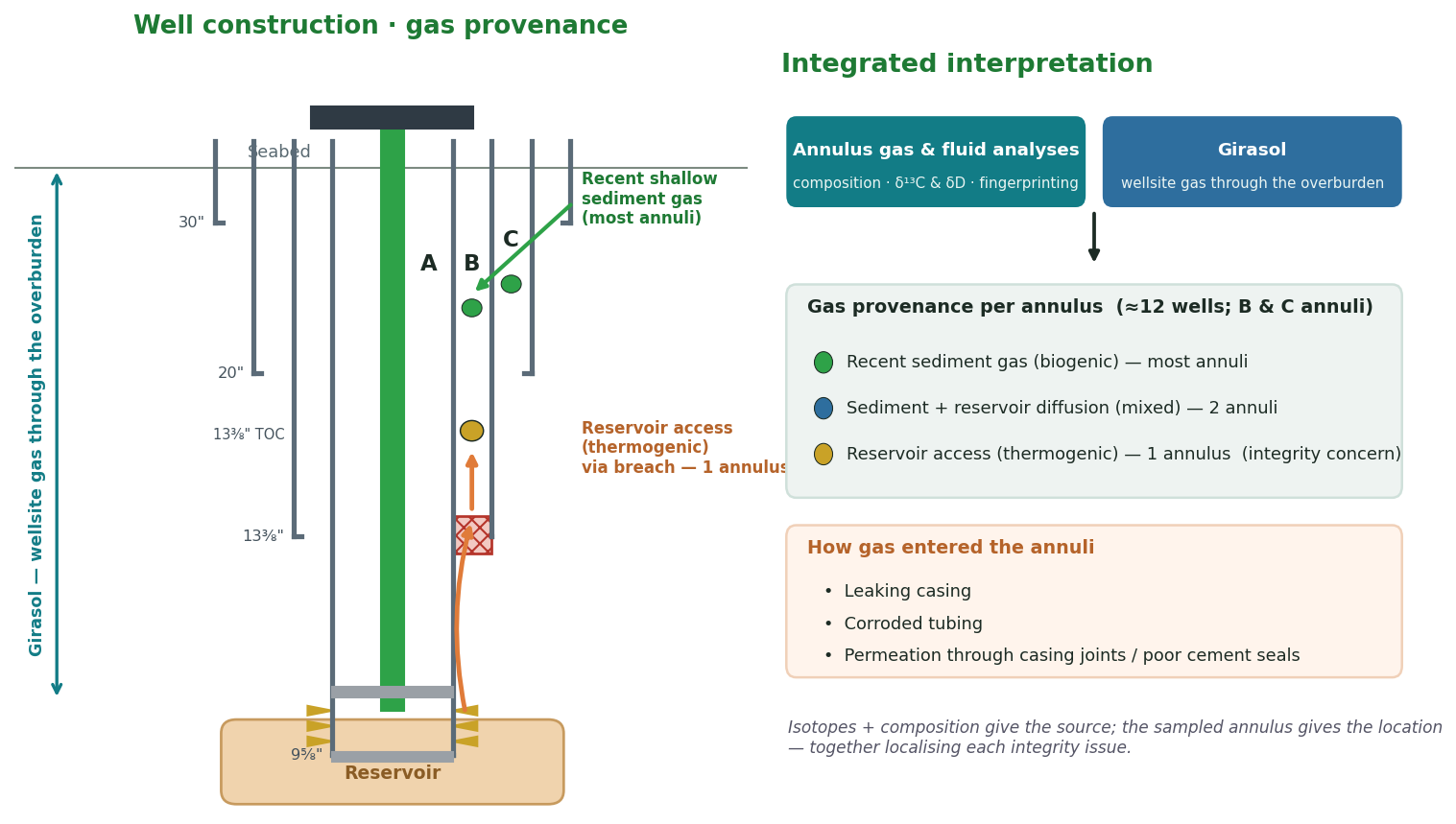
Following ROV inspection that identified gas in the B and C annuli across around a dozen wells, APT designed and delivered an integrated geochemical well-integrity evaluation.
- Gas composition and stable isotope (δ13C & δD) analysis of annulus gases.
- Provenance assessment against benchmark reservoir/injection gases – biogenic vs thermogenic vs corrosion.
- Fluid finger printing on recovered annulus liquids – whole-oil GC, biomarkers and isotopes – compared to reservoir oil and drilling fluids
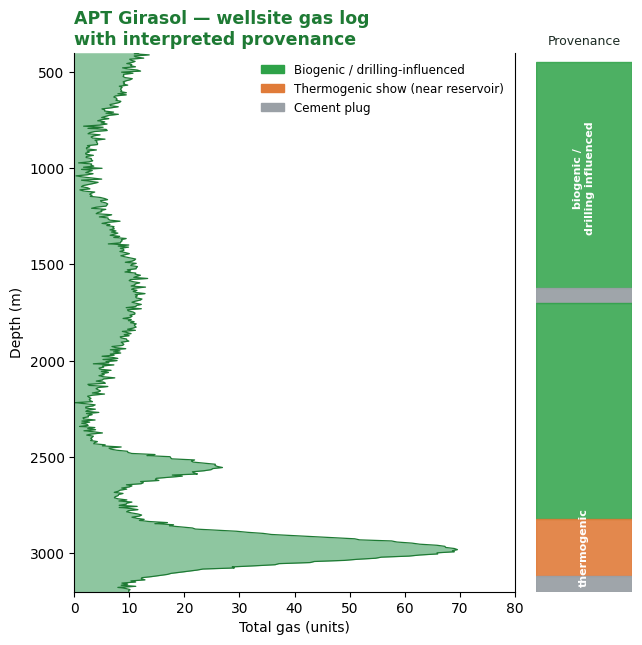
- Interpretation of wellsite gas data through the overburden using APT's Girasol software
- Integration of all datasets to identify gas source(s) and inform the remediation programme
“Bubbling methane around infrastructure can be a concerning discovery – but if geochemical analyses quantifiably confirms the source as recent, near-surface gas, rather than a reservoir leak, follow up considerations are very different. Gas geochemistry is inexpensive, rapid and delivers the quantifiable information you need to be sure about.”
– Craig D. Barrie,Senior Geochemist, APT
Key Highlights
- Gas in all but one annulus was diagnosed as shallow biogenic gas (methane-dominated, dryness >99%, methane δ13C heavier than −65‰) – recent sediment gas permeating in, not a deep reservoir leak.
- A single B-annulus gas carried a thermogenic signature (enriched methane, lower dryness), showing that one annulus had gained access to the reservoir via leaking casing, corrosion or a poor cement seal.
- Elevated hydrogen with corrosion-consistent deuterium isotopes flagged active corrosion in several annuli.
- Are covered annulus liquid was resolved as mostly drilling fluid with a minor reservoir-oil component - independently confirming reservoir access on that well.
- Girasol interpretation of the wellsite gas data mapped biogenic, thermogenic and drilling-influenced intervals through the overburden and across cement plugs, complementing the annulus results.
The first line of defence. Gas geochemistry targets exactly the component you need to be sure isn't leaking — and it is inexpensive and rapid relative to intervention. Diagnosing bubbling methane as recent, near-surface gas rather than a deep reservoir leak lets operators report with confidence.
Conclusion
By fingerprinting the gases and fluids themselves, APT resolved a critical well integrity/decommissioning question: almost all of the annulus gas was shallow, recent and unrelated to the deep reservoir, with a single reservoir-connected annulus isolated for targeted remediation. Integrating Girasol wellsite gas interpretation with annulus geochemistry gave a full picture of where hydrocarbons sit in the wellbore and overburden. Delivered from targeted analyses at a fraction of the cost of intervention, the workflow gives operators defensible answers – and is set to be increasingly central to safe, cost-effective decommissioning.